Oct 21: Have you ever returned from a holiday with hundreds of photographs but struggled to remember a moment when you actually sat down and enjoyed the place? You visited the famous attractions, tried the local food and followed the itinerary as planned. Yet, between waking up early, packing bags, travelling to the next stop and checking into another hotel, the holiday somehow felt like a race.
It is easy to understand how this happens. We see beautiful destinations on Instagram, save recommendations from travel influencers and make lists of places we must visit. When we finally plan a trip, we try to fit as much as possible into the few days we have. Nobody wants to return home feeling that they missed something important, especially after spending time and money on a holiday.
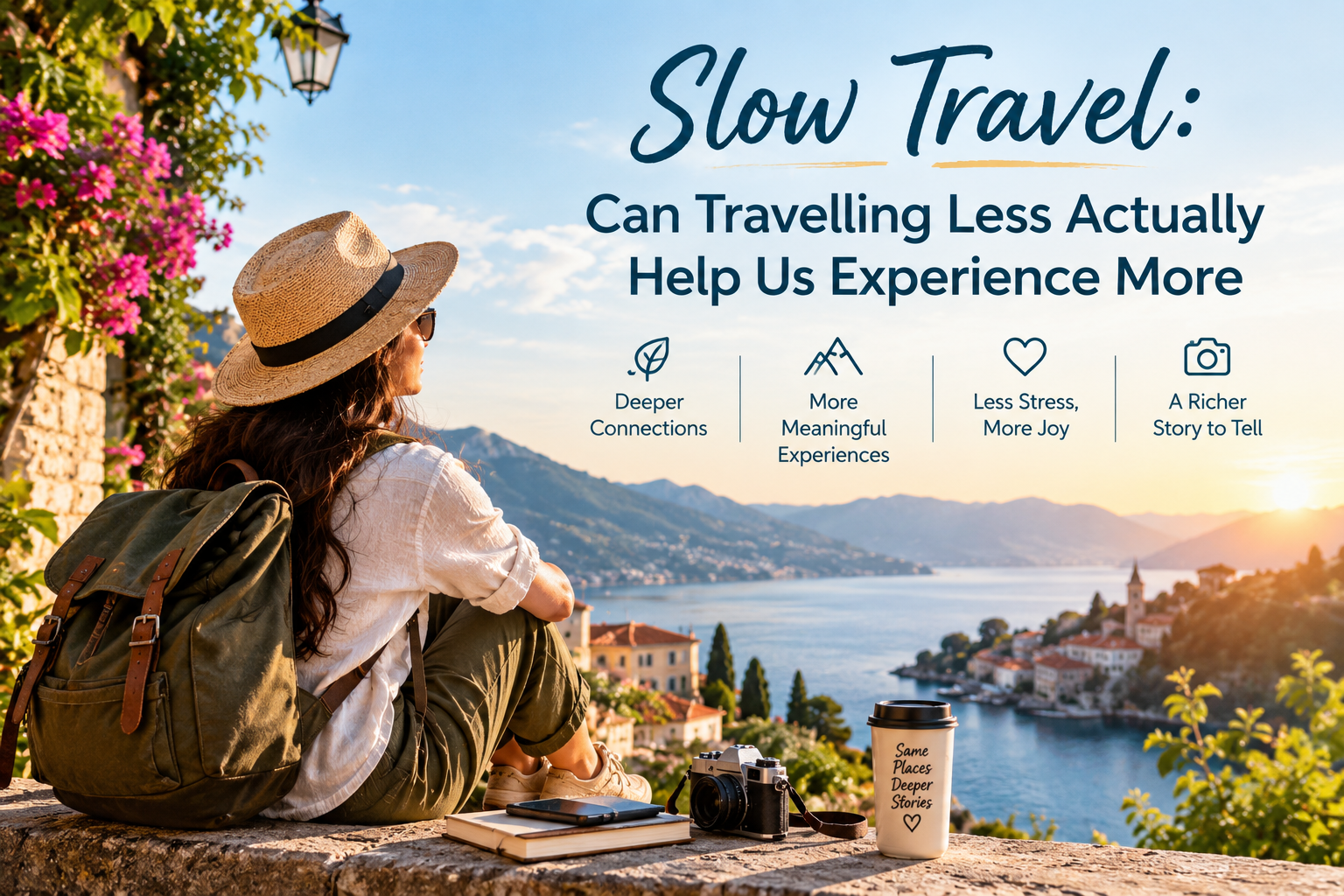
But what if we could enjoy travelling more by trying to do less? This is the idea behind slow travel. Instead of rushing through several destinations, we spend more time in fewer places, notice the details around us and allow the experience to unfold naturally. It is not about travelling less for the sake of it. It is about giving ourselves enough time to enjoy where we are.
When a Holiday Starts Feeling Like Work
Think about a typical Kerala holiday itinerary. You might spend a night in Kochi, drive to Munnar the next morning, head to Thekkady the following day and finish with a houseboat stay in Alleppey. It sounds wonderful when you first plan it. But after hours on the road, repeated packing and checking in and out of hotels, you may find yourself looking forward to getting home and resting.
Of course, some people love packed itineraries. If you have limited leave or are visiting a place for the first time, seeing several attractions may make perfect sense. The trouble begins when every hour is planned so tightly that even stopping for a cup of tea feels like a delay. A holiday should not leave you feeling guilty for taking a break.
Slow travel offers another way to measure a good trip. Instead of counting how many places you have visited, think about what you actually enjoyed. An afternoon spent exploring one beautiful town at your own pace may leave a stronger memory than rushing through four destinations just to say you have been there.
Discovering the Life Beyond the Tourist Map
Every destination has its famous sights, but there is another side to a place that visitors often miss. It is found in the local market opening early in the morning, the small bakery around the corner, the conversations happening over tea and the quiet streets before the crowds arrive.
Imagine spending three days in Fort Kochi instead of treating it as a quick stop on a larger trip. You could wander through its streets without constantly checking the time, stop at an art gallery that catches your attention or spend an unhurried afternoon in a café. You might discover a little shop or a neighbourhood you would never have noticed while hurrying towards the next attraction.
Something interesting happens when we stay in one place for longer: we begin to notice things beyond its postcard image. We may recognise the same shopkeeper on a second visit, learn which local dish people actually enjoy or discover a quiet street that never appeared in a travel guide. The destination gradually becomes more familiar, and that familiarity can make the experience feel more personal. We stop seeing only what we came to photograph and begin noticing what makes the place distinctive.
The Benefits of Slow Travel Go Beyond Relaxation
Many people travel because they want a break from their usual routine. Yet, sometimes, we carry the same hurried mindset into our holidays. We wake up early, rush through breakfast, worry about traffic and keep checking how much time remains before the next activity. The surroundings may be different, but the pressure feels familiar.
Spending longer in one place can make it easier to let go of that pressure. You might enjoy breakfast without rushing out, take an evening walk or spend an hour watching the rain from a balcony. There is no need to turn every free moment into another activity. Sometimes, having nothing urgent to do is part of the pleasure of getting away.
The benefits of slow travel can also include a greater appreciation of local culture and more opportunities for spontaneous experiences. Of course, a slower pace does not guarantee a stress-free holiday, and some people genuinely enjoy busy itineraries. The point is not to follow another travel trend but to understand what helps you enjoy a trip instead of merely getting through it.
Slow Travel Does Not Have to Be Expensive
The phrase slow travel might bring to mind spending a month in a European village or working remotely from a beachside resort. But it can be much simpler, and it certainly does not require a large budget. Even a weekend away can feel different when you choose one destination and give yourself time to explore it.
Instead of visiting three nearby towns in two days, you could spend the weekend in one town, explore its local food and visit a few places that genuinely interest you. An extra night may increase accommodation costs, but spending less on repeated transfers or choosing a less crowded season might help balance the budget. The best option depends on transport, accommodation prices and your available time.
You can also make the experience more personal by choosing activities that suit your interests. A food lover might explore local markets and traditional eateries, while someone who enjoys nature could spend time walking or watching birds. Checking weather conditions, transport schedules and accommodation reviews beforehand is still important, particularly during the monsoon in parts of India. Travelling slowly does not mean planning carelessly; it means leaving room to enjoy what you have planned.
Perhaps the Best Memories Cannot Be Rushed
When we look back on a holiday, the moments we remember are not always the ones we carefully planned. It might be a conversation with a friendly shopkeeper, the taste of a dish we had never tried before, an unexpected view from a quiet road or the pleasure of sitting somewhere with no particular reason to leave.
These moments rarely appear on lists of must-see attractions. They may not even make it into our photographs. Yet, they can become the memories we revisit long after the trip is over. Giving ourselves time to notice them is one of the simplest pleasures of travelling at a slower pace.
Slow travel does not mean avoiding popular destinations or giving up the excitement of exploring somewhere new. It simply reminds us that a holiday is not a competition to see the most places. Perhaps the real measure of a journey is not how many destinations we can name when we return, but how much of a place we carry with us after we leave.