Sep 05: Doctors at Max Super Speciality Hospital, Noida, have successfully performed an advanced Oblique Lateral Interbody Fusion spine surgery on a 73-year-old woman, helping her regain mobility and walk independently after months of worsening pain. The complex case was particularly challenging as the patient had multiple comorbidities, including a significant cardiac history, with five coronary stents and three previous angioplasty procedures, along with diabetes.
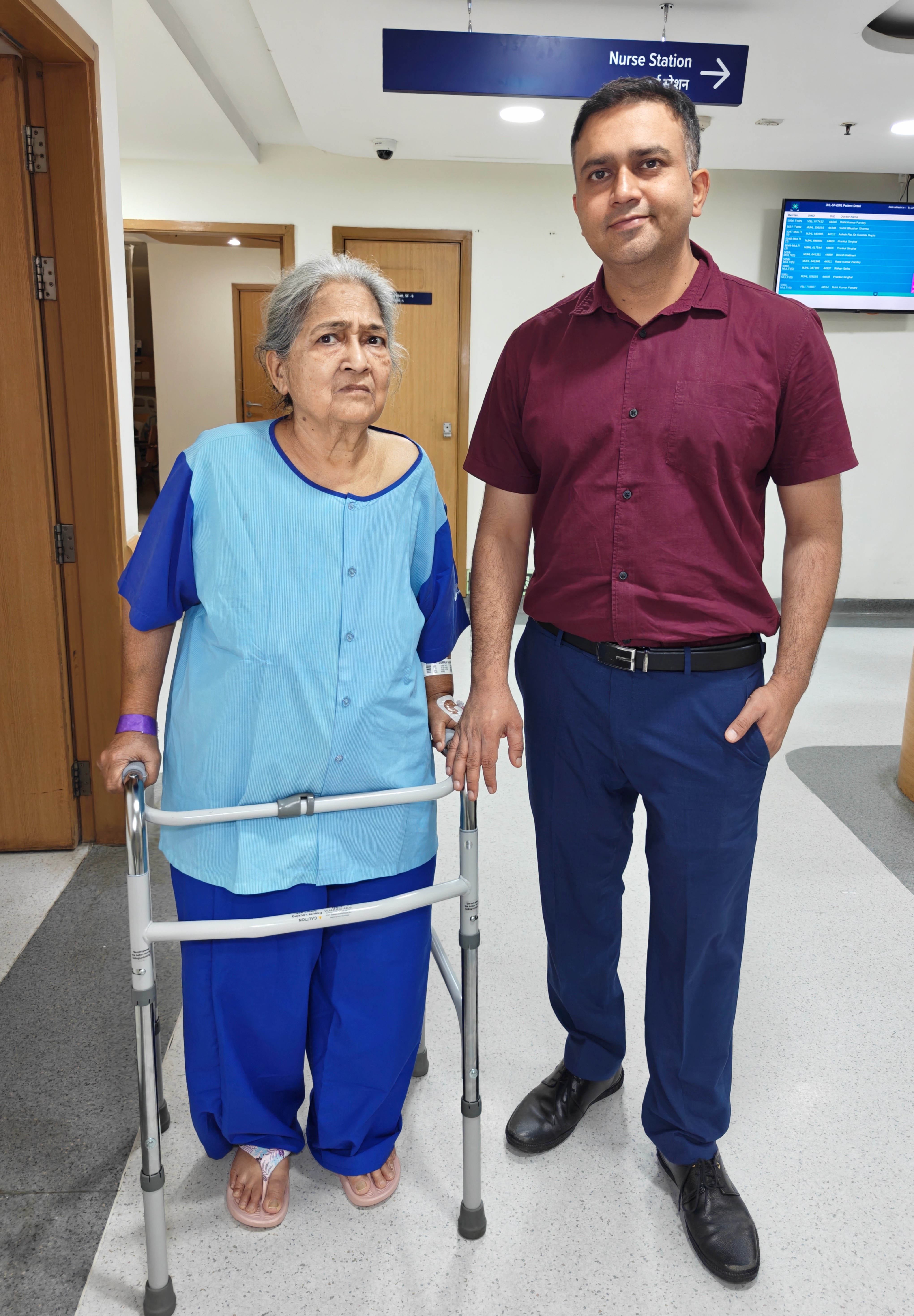
The patient, Ms. Suman Sharma, a resident of Noida, had been experiencing significant lower back pain, difficulty in walking and performing her routine activities for the last 5-6 months, which had substantially affected her independence and quality of life.
After continued struggle with debilitating symptoms without a definitive solution, the patient’s family sought advanced spine care at Max Super Speciality Hospital, Noida. Given her advanced age and underlying medical conditions, conventional open spinal surgery could have involved considerable surgical stress and associated risks. After a comprehensive evaluation of her overall health and spine condition, the multidisciplinary team at Max Hospital, Noida, carefully planned an OLLIF procedure, an advanced minimally invasive spine surgery technique that allows surgeons to access and stabilize the affected area through a small incision.
Dr. Rohit Kumar Pandey, Senior Consultant – Neurosurgery & Neuro Spine Surgery, Max Super Speciality Hospital, Noida, said,
“There is a common misconception that elderly patients with conditions such as heart disease and diabetes cannot safely undergo complex spine surgery. While such cases require careful evaluation and additional precautions, treatment decisions should be guided by the patient’s overall condition rather than age alone. In this case, the patient had five coronary stents and a history of three angioplasty procedures, making surgical planning particularly challenging. We opted for an OLLIF procedure, a minimally invasive technique that enabled spinal stabilization while reducing tissue disruption, blood loss and overall surgical stress.”