Oct 30: Have you ever told yourself that life will finally feel good once a few things fall into place? Perhaps when you get that promotion, move into a better home, become financially comfortable or sort out a difficult relationship. It is a familiar way of thinking. We often treat happiness as something waiting for us at the end of a long list of achievements.
But life rarely follows the plan we make for it. Some dreams take longer than expected, relationships change, and even the things we once worked hard for can bring new responsibilities. Still, people find reasons to smile, enjoy a good conversation and look forward to another day. So, can you be happy without having a perfect life? Absolutely. Sometimes, the secret is not in getting everything right but in learning to enjoy life while it is still a work in progress.
The Problem With Waiting for Life to Be Perfect
Think about how often we postpone happiness. We decide that we will enjoy life once we earn a little more, travel after finishing a major project or relax when family responsibilities become lighter. There is always something that needs to happen first.
The trouble is that one achievement often leads to another expectation. A better salary may bring bigger expenses. A new position may mean longer working hours. Even after reaching a goal we have looked forward to for years, the excitement may gradually settle, and our attention shifts to the next thing. Before long, we are working towards another milestone without taking much time to enjoy the one we have reached.
Psychologists describe part of this experience as hedonic adaptation – our tendency to get used to positive changes over time. The new car, the promotion or the long-awaited purchase may feel wonderful initially, but eventually becomes part of everyday life. We begin to expect what once made us happy.
There is nothing wrong with having goals. The problem begins when we make happiness dependent on reaching them. If every achievement becomes just another starting point, we may spend years preparing to enjoy a life we are already living.
A Happy Life Can Still Have Difficult Days
We sometimes assume that happy people have fewer problems. Perhaps they have stable jobs, supportive families or fewer financial worries. But happiness is not always a reflection of how easy someone's life is.
A person dealing with work pressure may still look forward to dinner with family. Someone going through a difficult phase may find comfort in a friend's phone call. A parent managing endless responsibilities may still smile at something their child says.
These small moments do not solve the problems. They simply remind us that life is made up of more than the things that go wrong. A difficult week does not mean every part of life is unhappy, just as a joyful afternoon does not mean all our worries have disappeared.
Of course, this does not mean we should ignore genuine difficulties or pretend everything is fine. Financial stress needs practical attention, unhealthy relationships may require difficult decisions, and emotional struggles deserve care. But we do not have to put every pleasant experience on hold until all our problems disappear.
When Someone Else's Life Starts Looking Better
It is surprisingly easy to feel dissatisfied with our own lives after spending time on social media. Someone is travelling abroad, someone has bought a new house, another person has started a successful business, and someone else seems to have the perfect family life.
We see these moments while going about our ordinary day – perhaps sitting in traffic, finishing household work or worrying about an unfinished task. Without realising it, we begin comparing our everyday reality with someone else's carefully selected highlights. Gradually, things that once made us happy may start feeling ordinary or insufficient.
But we rarely know the full story behind those pictures. A beautiful home does not tell us about the financial commitments attached to it. A successful career does not reveal the personal sacrifices involved. And a happy-looking photograph cannot show us what happens after the camera is put away.
Instead of asking why our lives do not look like someone else's, it may be more helpful to ask: Am I building a life that feels right for me? The answer does not have to match anyone else's definition of success.
The Little Things We Often Overlook
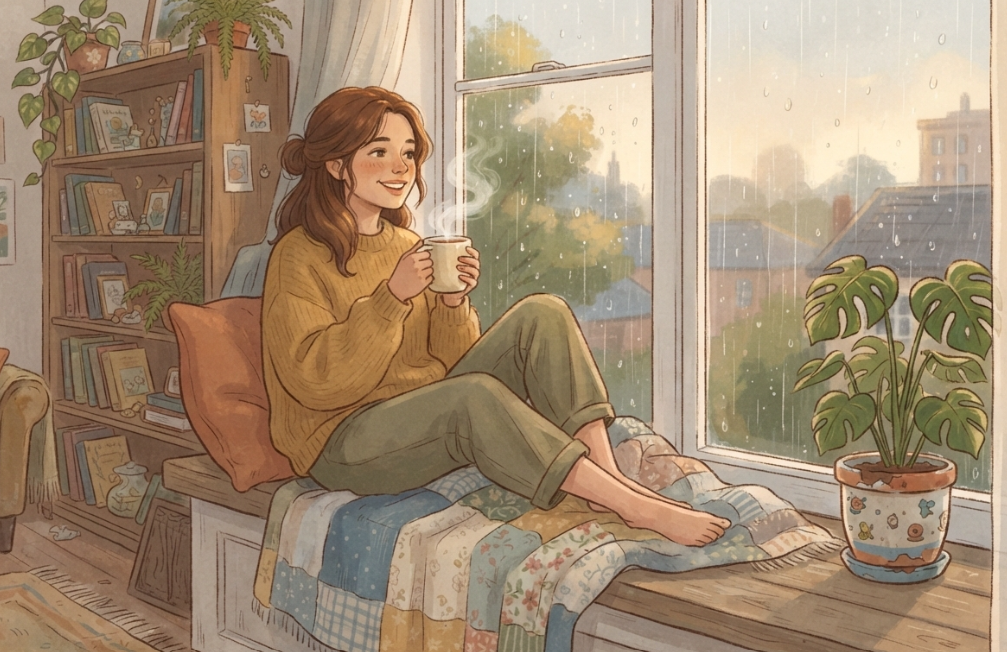
Happiness does not always arrive with a major announcement. Sometimes, it is simply a quiet morning without rushing, a familiar meal after a tiring day, a conversation with someone who understands us or the pleasure of sitting down after finishing a long list of chores.
These moments are easy to overlook because they do not seem important enough. We often give more attention to what is missing than to what is already part of our lives. Yet, it is often these ordinary experiences that make everyday life feel comforting and meaningful.
A simple habit can help change that. Before going to bed, think of three things that made the day a little better. Perhaps a task went well, someone checked on you, or you finally found time to do something you enjoy.
It may seem like a small exercise, but it encourages us to notice the good alongside the difficult. It is not about pretending to be grateful when we are unhappy. It is about giving the ordinary, positive parts of life the attention they deserve.
Accepting Imperfection Does Not Mean Giving Up
There is an important difference between being content with life and refusing to improve it. We can appreciate what we have while still wanting something better.
Imagine someone who is unhappy with their current job and wants to move into a different field. They can acknowledge that the present job provides financial stability while taking practical steps towards a career change. They do not have to pretend to love their current situation, nor do they have to spend every day feeling miserable until a new opportunity arrives. They can appreciate what is working and still make plans for what needs to change.
The goal is not to stop dreaming. It is to stop treating the present as a waiting room for the future.
When something bothers us, we can ask ourselves two simple questions: What can I do to improve this situation? and What do I need to accept for now? Some things need action, while others may take time or remain outside our control. Knowing the difference can make everyday life feel less like a constant struggle.
Perhaps a Good Life Is Enough
There may never be a time when everything is exactly as we imagined. There will be unfinished plans, unexpected expenses, difficult conversations and days when nothing seems to go right. That is not necessarily a sign that life is going badly. It is simply part of being human.
A happy life does not have to be impressive from the outside. It can be built around meaningful relationships, work that gives us purpose, moments of peace and the freedom to enjoy ordinary things.
We can want more without dismissing what we already have. We can work towards a better tomorrow without making today's happiness wait. Perhaps the life we keep postponing is not somewhere in the future. It is taking shape in the ordinary days we sometimes overlook.
A perfect life may remain an impossible expectation, but a meaningful life is something we can begin appreciating long before everything falls into place.
Have you ever told yourself that life will finally feel good once a few things fall into place? Perhaps when you get that promotion, move into a better home, become financially comfortable or sort out a difficult relationship. It is a familiar way of thinking. We often treat happiness as something waiting for us at the end of a long list of achievements.
But life rarely follows the plan we make for it. Some dreams take longer than expected, relationships change, and even the things we once worked hard for can bring new responsibilities. Still, people find reasons to smile, enjoy a good conversation and look forward to another day. So, can you be happy without having a perfect life? Absolutely. Sometimes, the secret is not in getting everything right but in learning to enjoy life while it is still a work in progress.
The Problem With Waiting for Life to Be Perfect
Think about how often we postpone happiness. We decide that we will enjoy life once we earn a little more, travel after finishing a major project or relax when family responsibilities become lighter. There is always something that needs to happen first.
The trouble is that one achievement often leads to another expectation. A better salary may bring bigger expenses. A new position may mean longer working hours. Even after reaching a goal we have looked forward to for years, the excitement may gradually settle, and our attention shifts to the next thing. Before long, we are working towards another milestone without taking much time to enjoy the one we have reached.
Psychologists describe part of this experience as hedonic adaptation – our tendency to get used to positive changes over time. The new car, the promotion or the long-awaited purchase may feel wonderful initially, but eventually becomes part of everyday life. We begin to expect what once made us happy.
There is nothing wrong with having goals. The problem begins when we make happiness dependent on reaching them. If every achievement becomes just another starting point, we may spend years preparing to enjoy a life we are already living.
A Happy Life Can Still Have Difficult Days
We sometimes assume that happy people have fewer problems. Perhaps they have stable jobs, supportive families or fewer financial worries. But happiness is not always a reflection of how easy someone's life is.
A person dealing with work pressure may still look forward to dinner with family. Someone going through a difficult phase may find comfort in a friend's phone call. A parent managing endless responsibilities may still smile at something their child says.
These small moments do not solve the problems. They simply remind us that life is made up of more than the things that go wrong. A difficult week does not mean every part of life is unhappy, just as a joyful afternoon does not mean all our worries have disappeared.
Of course, this does not mean we should ignore genuine difficulties or pretend everything is fine. Financial stress needs practical attention, unhealthy relationships may require difficult decisions, and emotional struggles deserve care. But we do not have to put every pleasant experience on hold until all our problems disappear.
When Someone Else's Life Starts Looking Better
It is surprisingly easy to feel dissatisfied with our own lives after spending time on social media. Someone is travelling abroad, someone has bought a new house, another person has started a successful business, and someone else seems to have the perfect family life.
We see these moments while going about our ordinary day – perhaps sitting in traffic, finishing household work or worrying about an unfinished task. Without realising it, we begin comparing our everyday reality with someone else's carefully selected highlights. Gradually, things that once made us happy may start feeling ordinary or insufficient.
But we rarely know the full story behind those pictures. A beautiful home does not tell us about the financial commitments attached to it. A successful career does not reveal the personal sacrifices involved. And a happy-looking photograph cannot show us what happens after the camera is put away.
Instead of asking why our lives do not look like someone else's, it may be more helpful to ask: Am I building a life that feels right for me? The answer does not have to match anyone else's definition of success.
The Little Things We Often Overlook
Happiness does not always arrive with a major announcement. Sometimes, it is simply a quiet morning without rushing, a familiar meal after a tiring day, a conversation with someone who understands us or the pleasure of sitting down after finishing a long list of chores.
These moments are easy to overlook because they do not seem important enough. We often give more attention to what is missing than to what is already part of our lives. Yet, it is often these ordinary experiences that make everyday life feel comforting and meaningful.
A simple habit can help change that. Before going to bed, think of three things that made the day a little better. Perhaps a task went well, someone checked on you, or you finally found time to do something you enjoy.
It may seem like a small exercise, but it encourages us to notice the good alongside the difficult. It is not about pretending to be grateful when we are unhappy. It is about giving the ordinary, positive parts of life the attention they deserve.
Accepting Imperfection Does Not Mean Giving Up
There is an important difference between being content with life and refusing to improve it. We can appreciate what we have while still wanting something better.
Imagine someone who is unhappy with their current job and wants to move into a different field. They can acknowledge that the present job provides financial stability while taking practical steps towards a career change. They do not have to pretend to love their current situation, nor do they have to spend every day feeling miserable until a new opportunity arrives. They can appreciate what is working and still make plans for what needs to change.
The goal is not to stop dreaming. It is to stop treating the present as a waiting room for the future.
When something bothers us, we can ask ourselves two simple questions: What can I do to improve this situation? and What do I need to accept for now? Some things need action, while others may take time or remain outside our control. Knowing the difference can make everyday life feel less like a constant struggle.
Perhaps a Good Life Is Enough
There may never be a time when everything is exactly as we imagined. There will be unfinished plans, unexpected expenses, difficult conversations and days when nothing seems to go right. That is not necessarily a sign that life is going badly. It is simply part of being human.
A happy life does not have to be impressive from the outside. It can be built around meaningful relationships, work that gives us purpose, moments of peace and the freedom to enjoy ordinary things.
We can want more without dismissing what we already have. We can work towards a better tomorrow without making today's happiness wait. Perhaps the life we keep postponing is not somewhere in the future. It is taking shape in the ordinary days we sometimes overlook.
A perfect life may remain an impossible expectation, but a meaningful life is something we can begin appreciating long before everything falls into place.