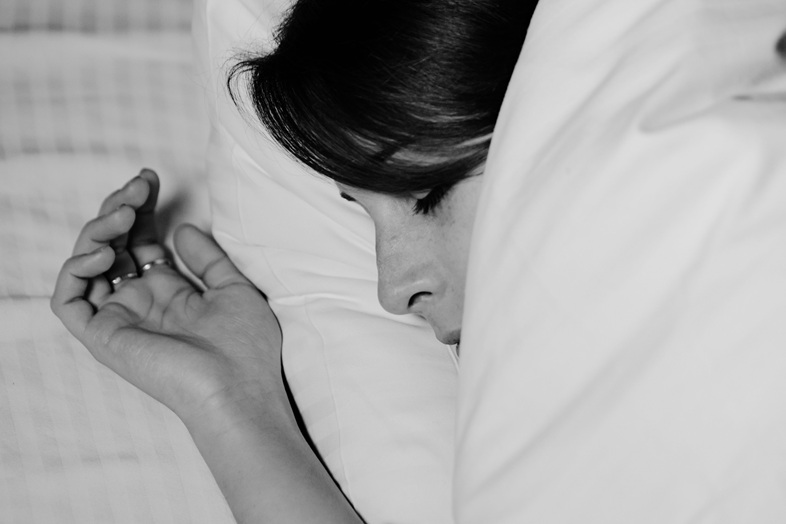
There are nights when you reach your bed completely exhausted, certain that you will fall asleep as soon as your head touches the pillow. And then nothing happens.
You turn to one side. Then the other. You check the time. Think about tomorrow. Remember something you should have done during the day. Perhaps you pick up your phone for “just a minute”. Before you know it, another hour has gone by. It can be incredibly frustrating.
After all, you are tired. So why aren't you sleeping? The simple answer is that feeling tired and being ready for sleep are not always the same thing.
Your Body Can Be Tired While Your Mind Is Still Awake
A long day can leave your body exhausted. Work, travelling, household responsibilities, studying, caring for children or simply dealing with a busy day can drain your energy.
But the brain doesn't necessarily slow down at the same speed. You may finally get into bed and suddenly start thinking about everything you didn't have time to think about during the day.
Tomorrow's work. An unfinished task. A conversation you had. A bill that needs to be paid. Something a family member said. The moment the day's distractions disappear, your thoughts can become much louder. Your body is ready to rest. Your mind hasn't quite received the message.
Sleepiness Is More Complicated Than Exhaustion
We often imagine sleep as a simple equation: the more tired you become, the faster you should fall asleep. The body is actually working with several signals.
One is sleep pressure, which builds the longer you stay awake. Another is your circadian rhythm, the internal body clock that influences when you naturally feel sleepy and alert.
These two systems work together, but they don't always send exactly the same message. You might be physically exhausted at 9 p.m. but feel more alert again at 11 p.m. Your body has not suddenly decided that it no longer needs sleep. Your internal clock may simply be promoting wakefulness at that particular time. So when people wonder, “Why can't I sleep when I'm tired?”, the answer is often more complicated than simply needing more rest.
Sometimes You Push Past Your Sleepy Window
Have you ever felt sleepy while watching television, decided to stay awake a little longer and then found yourself wide awake when you finally went to bed?
It happens.
You may have been genuinely sleepy earlier, but continuing with work, conversations, television or phone scrolling can change how you feel by the time you actually get into bed.
This is one reason the idea of “I'll sleep when I'm completely exhausted” doesn't always work. Sometimes waiting until you are utterly drained can make bedtime more complicated rather than easier.
The Phone Doesn't Always Let the Day End
Our phones have quietly changed what bedtime looks like. A quick WhatsApp check can become several messages. One Instagram reel becomes five. A YouTube video leads to another recommendation. A news notification catches your attention just when you were beginning to feel sleepy. And it isn't only the screen itself.
What you are looking at matters too. An emotional social media post, a worrying news story or an interesting video can keep your mind engaged long after your body has become tired. You may be lying in bed, but mentally, the day is still continuing.
Stress Doesn't Always Look Like Panic
Sleep problems are often associated with obvious anxiety, but stress can be much quieter. Sometimes it looks like planning.
You are mentally organising tomorrow's schedule. Calculating expenses. Thinking about your child's studies. Remembering an appointment. Going over a conversation and wondering whether you handled it correctly.
During the day, there may be enough noise and activity to keep these thoughts in the background. At night, there is nowhere for them to hide. That is why some people feel perfectly fine throughout the day and suddenly become deep thinkers the moment they switch off the light.
Your Weekend Can Confuse Your Body Clock
An occasional late night is not something to worry about. The difficulty can come when late nights and late mornings become a regular pattern.
For example, sleeping early on weekdays but staying awake until 1 or 2 a.m. on weekends can create a significant shift in your sleep schedule. Sleeping longer the next morning may feel wonderful after a tiring week, but repeatedly changing your timings can make it harder to settle back into the weekday routine.
This is one reason consistent sleep habits matter. Your body generally prefers a rhythm it can recognise rather than a completely different schedule every few days.
More Tired Isn't Always Better
When sleep is difficult, the natural reaction is often to think, “I need to tire myself out more.” But sleep isn't something you win by becoming increasingly exhausted. Sometimes what is missing is not physical tiredness but a transition between a busy day and a quieter night.
If you move directly from work to dinner, from dinner to scrolling and from scrolling straight into bed, your brain may not get much indication that the day is winding down. A calmer evening can sometimes be more helpful than simply adding more activity to an already exhausting day.
Not Every Sleep Problem Is About Your Routine
It is easy to blame every poor night's sleep on late-night phone use or an inconsistent bedtime. Those factors can certainly matter, but they are not the whole story.
Persistent sleep difficulties can sometimes be associated with conditions such as sleep apnoea, restless legs syndrome, chronic pain or hormonal changes. Certain medications and other health conditions can also affect sleep.
This is why regularly struggling to fall asleep, stay asleep or feeling unrefreshed despite getting enough time in bed should not simply be dismissed as a lack of tiredness. Occasional restless nights are part of being human. Persistent problems deserve more attention.
Listen to What Your Whole Body Is Saying
Going to bed tired certainly helps create sleep pressure, but tiredness alone cannot guarantee good sleep quality. Sleep pressure, your body clock, stress, habits, environment and overall health all play a role.
So if you occasionally find yourself staring at the ceiling despite being exhausted, it does not necessarily mean something is wrong. But if poor sleep regularly affects your mood, concentration, energy or everyday life, it is worth looking beyond the question of whether you are tired enough.
Better sleep is not always about exhausting the body. Sometimes it is about allowing the mind to finish the day. Because when the lights go out, the body may be ready to rest long before the mind has learned how to let go.