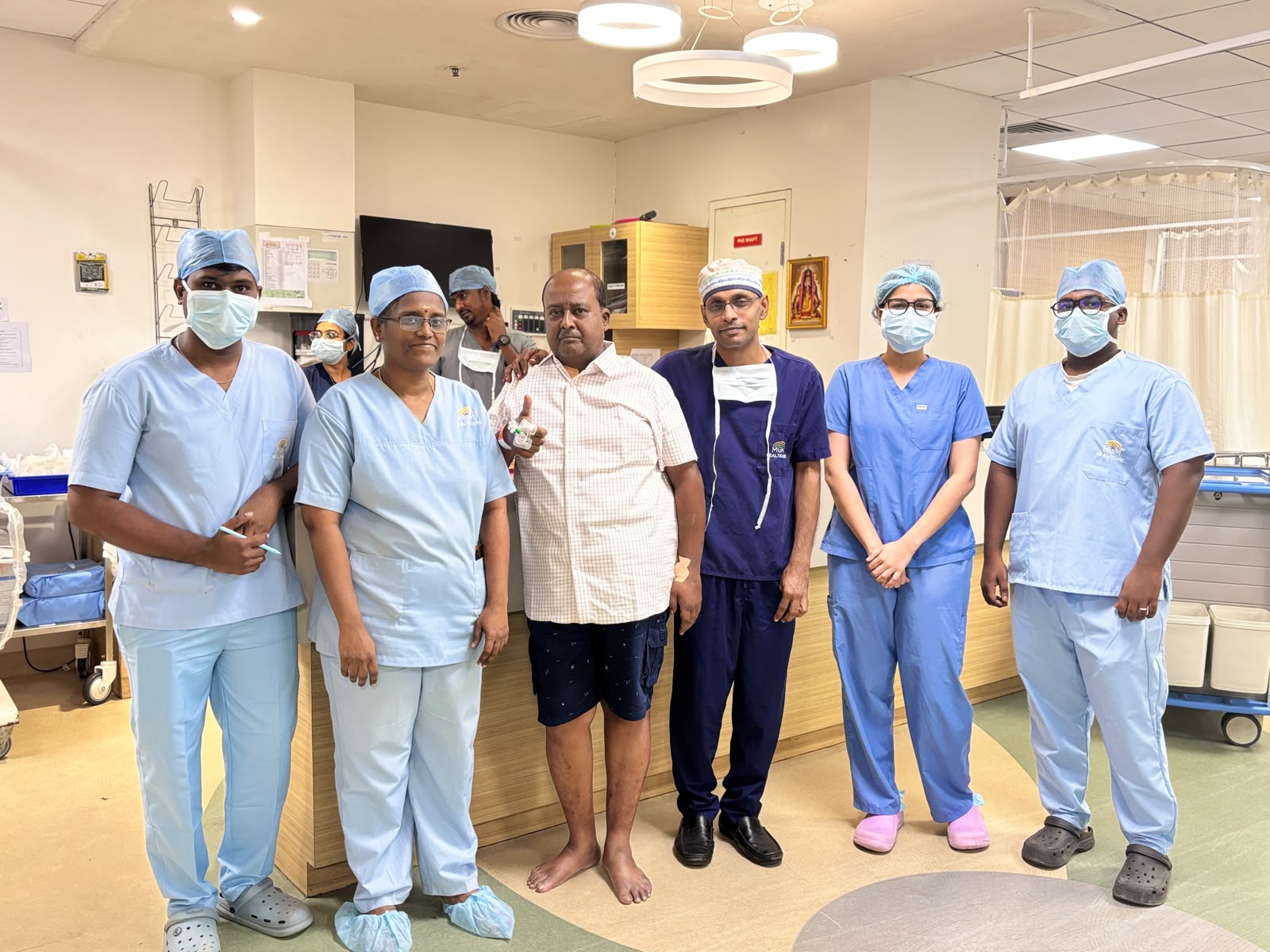
Chennai, 24 July: In a rare surgical achievement, MGM Healthcare has successfully performed a robot-assisted coronary artery bypass graft (CABG) surgery on a 49-year-old man from West Bengal suffering from complex triple vessel coronary artery disease.
The patient, a known case of coronary artery disease, had previously undergone two angioplasty procedures with stent implantation - one in 2021 and another in 2024. However, both stented arteries had developed severe in-stent restenosis, with nearly 90% blockage, while a third coronary artery had around 60% narrowing, necessitating coronary artery bypass surgery.
While robotic surgery has increasingly found applications in cardiac procedures, robot-assisted CABG remains relatively uncommon in India because of its technical complexity and the specialised expertise required. The 4-hour surgery was performed on the beating heart, avoiding the use of a conventional sternotomy.
The procedure was particularly challenging as the patient was obese and diabetic, both of which significantly increase surgical complexity and the risk of postoperative complications. Despite these challenges, the surgery was completed successfully. Owing to the minimally invasive robotic approach, meticulous surgical planning, and comprehensive postoperative intensive care, the patient made an excellent recovery. He is expected to return to his normal routine and resume work within about five days, a remarkably short recovery period for a patient undergoing coronary artery bypass surgery.
The multidisciplinary team behind this clinical achievement comprised cardiac surgeons Dr. K. R Balakrishnan, Chairman - Cardiac Sciences and Director - Institute of Heart and Lung Transplant & Mechanical Circulatory Support, and Dr. Vinod Kumar Manikala, Cardiothoracic Surgeon; cardiac anaesthetists Dr. Suresh Rao and Dr. Ajay Aravind, and ICU intensivist Dr. Arthi.
In his comments, Dr. Balakrishnan said, “Conventional coronary artery bypass surgery requires opening the chest through a midline incision of nearly 12 inches and dividing the breastbone. With the robotic approach, we were able to perform the procedure through a small incision of about two inches on the left side of the chest, significantly reducing surgical trauma while achieving the same objective. This was, however, an exceptionally challenging case. The patient’s heart function was severely compromised, with an ejection fraction of only around 30%, indicating a weak pumping capacity. In addition, he was obese, making access to the target coronary arteries technically demanding. Performing a robot-assisted bypass on a beating heart under these circumstances requires meticulous planning, precise execution and seamless teamwork.”
In his comments, Dr Vinod Manikala said, “The greatest benefit of this robotic approach is what the patient experiences after surgery. He was extubated on the very first postoperative day, recovered rapidly, and is expected to return to his normal life within about ten days. Most patients undergoing this procedure can resume their professional and daily activities within five days, which is significantly earlier than with conventional open-heart surgery. Beyond the faster recovery, robotic coronary artery bypass offers the advantage of durable and safer surgical revascularisation. This approach is particularly beneficial for patients with multiple co-morbidities, obesity, osteoporosis, advanced age, or heavily calcified coronary arteries, where minimising surgical trauma can make a meaningful difference to recovery.”