Oct 19: Have you ever had one of those days when you wished you could switch off your phone, leave everything behind and go somewhere nobody expected anything from you? Perhaps you imagined sitting beside the sea, spending a few days in the mountains or simply staying home without having to answer questions, meet deadlines or take care of anyone else's needs. Just thinking about it can feel like a relief.
Most of us know that feeling. Work piles up, family responsibilities seem endless, and even a simple message can feel like one more demand on an already crowded mind. Sometimes, all we need is a proper break. At other times, we are so tired of dealing with a situation that we want to stop thinking about it altogether.
There is a difference between the two. Taking time away can help us return feeling calmer and more capable. But constantly wishing to escape can leave us waiting for a different life before we allow ourselves to feel better. Learning healthy ways to cope with stress begins with understanding what we really need: rest, a change in perspective, support or perhaps a change in the situation itself.
When Distraction Becomes a Way of Avoiding Life
We all have things we would rather not deal with. It might be a difficult conversation with a family member, an email we have been postponing or a decision we are afraid of getting wrong. When something feels uncomfortable, it is tempting to put it aside and do something that offers immediate relief.
Psychologists sometimes use the term experiential avoidance to describe attempts to escape uncomfortable thoughts, feelings or memories rather than making room for them. In everyday life, this might mean keeping ourselves constantly busy so that we do not have to think about a disappointment, or repeatedly scrolling through our phones whenever worry begins to surface. These responses can bring temporary comfort, but the underlying concern may remain.
There is nothing wrong with seeking distraction occasionally. A favourite film, a conversation with a friend or an evening spent doing something enjoyable can help us unwind. The important question is whether the break helps us recover or becomes our only way of coping. If the same problem keeps returning, it may be time to consider what needs attention rather than simply finding another way to avoid it.
Rest Versus Avoidance: How Can You Tell the Difference?
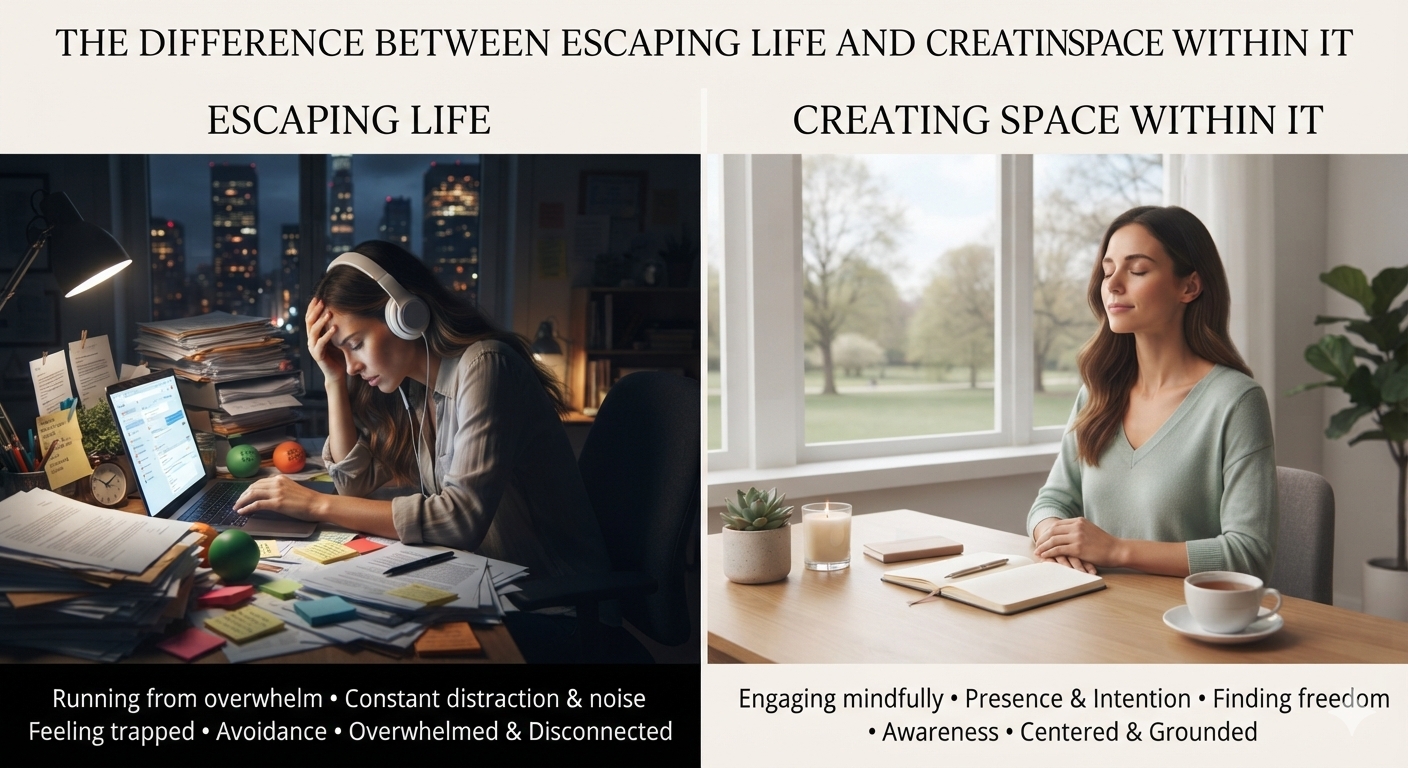
Imagine coming home after a demanding day. You change into comfortable clothes, make a cup of tea and sit quietly for a while. You may still have work to finish, but you feel less tense and better able to approach it. Your circumstances have not changed, yet the pause has helped you regain some energy.
Now imagine spending the entire evening trying not to think about a problem that has been troubling you. You watch one episode after another, keep checking social media and stay occupied until it is time to sleep. The moment things become quiet again, the same worry returns. You have passed the time, but you may not have found the relief you were hoping for.
The difference is not always obvious, and both responses can exist together. A useful question is: After this break, do I feel a little more able to deal with my life, or am I more anxious about returning to it? There is no need to judge yourself for the answer. It can simply help you understand whether you need more rest, practical support or a different approach to the problem.
Creating Space Without Walking Away From Everything
We often imagine that peace requires a major change—a holiday, a new job or a few days away from everyone. These things can help, but they are not always possible when we need them. Bills still have to be paid, children need attention and work rarely pauses simply because we feel overwhelmed.
Sometimes, creating space begins with an ordinary decision. You might stop checking work messages after a reasonable hour, take ten minutes for yourself before starting the evening's chores or allow a non-urgent call to wait. If your schedule permits, leave a little breathing room between tasks instead of rushing from one responsibility straight into another.
It is also worth asking what is making life feel so crowded. Is it the amount of work, the expectation that you must always be available or the discomfort of saying no? Perhaps you have become the person everyone turns to, yet rarely admit when you need help yourself. You may not be able to change everything immediately, but identifying the source of pressure can help you decide where to begin.
You Don't Have to Fix Every Feeling Immediately
When we feel disappointed, lonely, frustrated or uncertain, we often want the feeling to disappear as quickly as possible. We distract ourselves, search for solutions or tell ourselves that we should not be feeling this way. Sometimes, the effort to feel better immediately becomes another source of exhaustion.
There are moments when what we really need is to acknowledge how we feel. Perhaps a plan did not work out, someone disappointed us or we are simply tired of carrying so many responsibilities. We can admit that something hurts without immediately deciding what to do about it. Talking to someone we trust, writing down our thoughts or sitting quietly for a few minutes may help us understand what is going on.
Mindfulness can help us notice thoughts and feelings without reacting to every one of them immediately. Feeling anxious does not mean we must make a decision that very moment, and feeling upset does not mean the entire day has to be lost. If distress persists or starts interfering significantly with everyday life, seeking support from a qualified mental health professional can also be a sensible step. We do not have to manage everything alone.
Sometimes, Creating Space Means Changing Something
There is an important point that self-care advice sometimes overlooks: not every difficult situation can be improved by changing our attitude. If work demands are consistently unreasonable, if responsibilities are unfairly distributed at home or if a relationship repeatedly leaves us feeling unsafe or diminished, a few minutes of mindfulness may not address the underlying problem.
In such circumstances, creating space may mean setting firmer boundaries, asking for help, having an honest conversation or considering a bigger change. These steps can be uncomfortable, especially when other people are accustomed to us always being available. But looking after our wellbeing does not require us to keep accepting every demand placed on us.
We may not always have the freedom to change a situation immediately. Financial responsibilities, family commitments and practical limitations are real. Even so, recognising that something needs to change can help us plan our next steps instead of blaming ourselves for struggling. Sometimes, the healthiest response is to stay and work through a difficulty; sometimes, it is to step away.
A Life That Leaves Room for You, Too
Many of us are so used to fulfilling responsibilities that we forget to ask whether our own needs are being met. We finish our work, look after our families, answer messages and help others wherever we can. By the time everything is done, there may be very little energy left for ourselves. Rest begins to feel like something we must earn.
But life cannot be made up entirely of obligations. We need conversations that make us laugh, time with people who understand us and activities we enjoy simply because they bring us pleasure. An unhurried cup of tea, a walk without a destination or an evening spent reading can have value even when nothing measurable comes from it.
The next time you feel like escaping everything, pause before dismissing that feeling. Perhaps you need sleep, solitude or help with a problem. Perhaps you need to face something you have been avoiding, or acknowledge that a situation can no longer continue as it is. You do not have to work everything out at once. Sometimes, the first step towards feeling better is creating enough space to understand what you need—and then giving yourself permission to respond honestly.