Oct 30: Have you ever returned from a holiday feeling as though you need another holiday to recover? You visited all the places you had planned, tried the restaurants on your list and took photographs at every popular attraction. Yet, somewhere between checking travel timings and rushing to the next destination, you barely found time to enjoy where you were.
Many of us plan holidays with the same attention we give to our work schedules. We make lists of places to visit, food to try and experiences we do not want to miss. There is nothing wrong with planning, of course. But the benefits of unplanned travel often become clear when we stop trying to fit every possible experience into a limited number of days.
Imagine arriving in a town without deciding exactly how the day should unfold. You take a turn down an unfamiliar street, stop at a little café or spend an extra hour watching the waves. None of it was part of the plan, but somehow, these become the moments you remember.
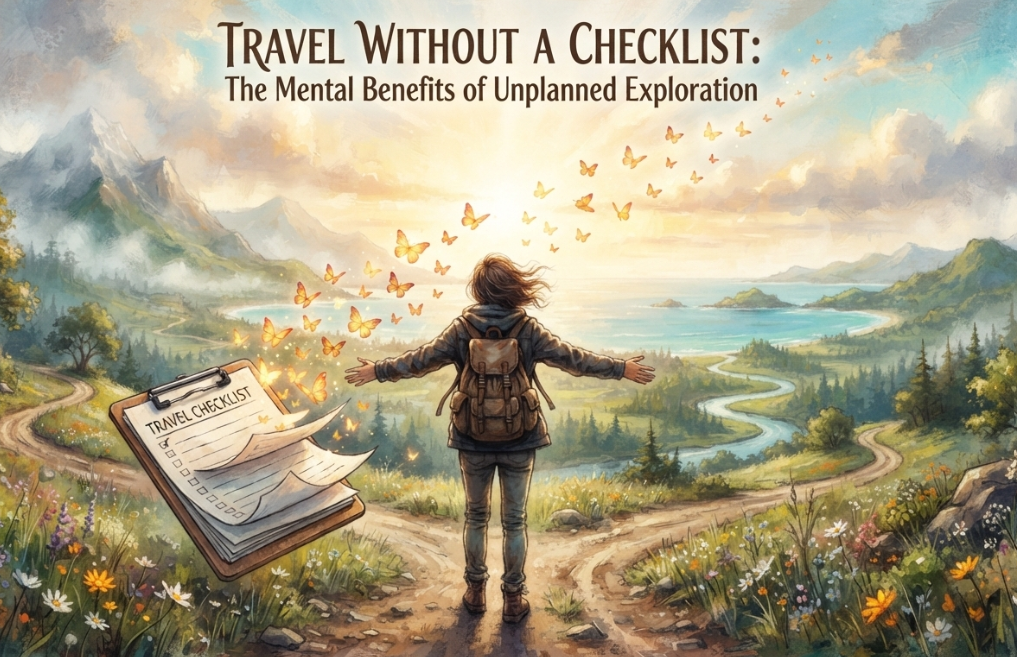
The real pleasure of unplanned travel is not about having no plans at all. It is about leaving enough room for life to surprise you. For people who spend most of their days managing deadlines and responsibilities, that freedom can be surprisingly refreshing.
When a Holiday Stops Feeling Like Another Assignment
Think about how most of our days are organised. There are office deadlines, school timings, household responsibilities, appointments and countless small things that need attention. Even weekends can become a race to finish everything that could not be done during the week.
Sometimes, we carry the same mindset into our holidays. We wake up early to cover several attractions, rush through breakfast to reach the next destination and worry about losing time if a journey takes longer than expected. By evening, we may have seen everything on our list but feel too tired to enjoy it.
Leaving a few hours unplanned can change that experience. You can wake up without immediately checking the day's schedule, enjoy breakfast slowly or decide to spend the afternoon somewhere you happen to like. With fewer decisions competing for your attention, there is more room to relax and enjoy your surroundings. A holiday, after all, is not an examination in which you have to complete every question before leaving.
The Little Things We Notice When We Stop Rushing
When we are busy following an itinerary, our attention is usually fixed on reaching the next place. We may pass a beautiful street, an interesting local shop or a quiet viewpoint without giving it much thought.
There is another habit that can sometimes get in the way: the need to document everything. We take photographs of every meal, record videos of every attraction and think about how the experience will look when shared online. Photographs are wonderful reminders of a trip, but when capturing a moment becomes more important than experiencing it, we can miss what is happening around us.
When there is no immediate destination, we begin to notice more. It could be the smell of fresh food coming from a roadside kitchen, the sound of rain falling on a hillside or the everyday activity of a local market. A trip to Munnar, for instance, does not have to revolve around visiting every popular viewpoint. You might enjoy an unhurried walk, stop at a small tea shop or simply spend some time looking at the landscape. Sometimes, the best way to remember a place is to put the phone away for a while.
Learning Not to Have Every Answer
For people who like to plan everything in advance, uncertainty can be uncomfortable. We prefer knowing where we will eat, how long a journey will take and what we will do if something goes wrong. Having a plan gives us a sense of control.
But travel does not always cooperate. A restaurant may be closed, a road may lead somewhere unexpected or a local recommendation may take us in a completely different direction. When every detail is fixed, even a small change can feel frustrating.
Unplanned exploration gives us a chance to become a little more flexible. We learn to consider alternatives rather than becoming upset when things do not happen as expected. Sometimes, the unexpected stop turns out to be more enjoyable than the attraction we originally planned to visit. It is a gentle reminder that not everything needs to happen according to schedule for an experience to be worthwhile. This flexibility can also make it easier to handle small uncertainties in everyday life.
Finding the Places That Do Not Appear on Travel Lists
Travel guides and social media often direct us towards the same famous landmarks, restaurants and photo spots. These places may be popular for good reason, but they are not the only way to experience a destination.
Some of the most interesting discoveries happen in places we find by chance. It might be a neighbourhood bakery, a small bookshop, a local market or a restaurant recommended by someone who lives nearby. A brief conversation with a shopkeeper may tell us more about a place than an entire page in a travel guide.
This is particularly true in India, where food, language and local traditions can change dramatically from one region to another. A recommendation from a resident might introduce you to a regional dish you have never tried or a quieter corner that does not feature in popular travel itineraries. These experiences make a holiday feel less like sightseeing and more like getting to know a place.
Sometimes, Doing Nothing Is the Best Part
We often expect a holiday to be exciting throughout. We want to explore, take photographs, try new activities and return with plenty of stories. But constant movement can be exhausting, especially when travelling involves long journeys, crowded places and unfamiliar surroundings.
There is something comforting about an afternoon with no particular purpose. You might sit by the beach, read a book, enjoy a long meal or return to your hotel earlier than expected. You do not have to feel guilty about missing an attraction or spending money on an experience you did not plan.
Unstructured time gives the mind a break from constantly deciding what comes next. Instead of thinking about timings, bookings and the next activity, you can simply be where you are. A slower day can make it easier to return home feeling that you have actually had a break. While a relaxed holiday is not a cure for stress or anxiety, stepping away from constant schedules can offer a welcome opportunity to unwind.
Plan the Essentials, Leave the Rest Open
Travelling without a checklist does not mean setting off without preparation. Accommodation, transport, weather conditions and local safety arrangements still deserve attention, particularly when travelling with children or visiting an unfamiliar destination.
A simple way to try this approach is to plan the essentials but leave some of the experience undecided. For a three-day holiday, you could schedule one or two important attractions on the first day, keep the second afternoon free for local exploration and leave the final morning flexible. You will still have a plan, but it will not dictate every moment.
The idea is to remain open to changing direction if something more interesting catches your attention. Perhaps a local recommends a small restaurant, you discover a quiet beach or you simply decide that an afternoon of rest sounds better than another sightseeing trip.
Perhaps the best travel memories are not always connected to the places we intended to visit. They may come from an unexpected conversation, a meal we discovered by chance or an afternoon when we simply forgot to check the time.
The next time you travel, try leaving a little space in your itinerary. You may discover that the moments you never planned become the ones you remember longest.