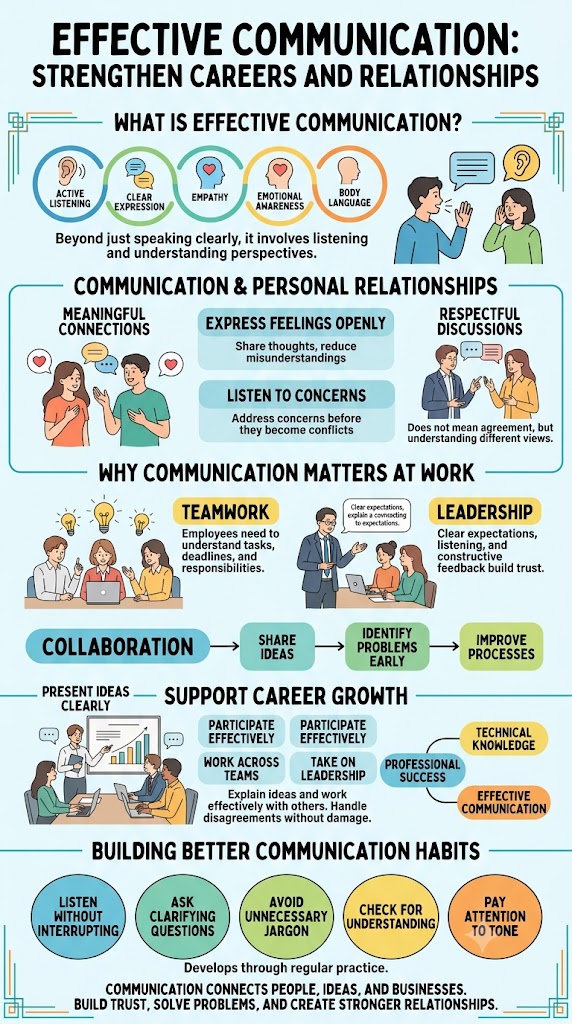
In both professional and personal life, communication is one of the most important skills people use every day. It is not simply about speaking well or choosing the right words. Good communication also means listening carefully, understanding different viewpoints and expressing ideas in a clear and respectful manner.
In the workplace, the quality of communication can influence how effectively people work together. A clear conversation can help employees understand their responsibilities, avoid mistakes and complete tasks on time. On the other hand, unclear instructions or poor communication can create confusion, delays and unnecessary disagreements.
One of the most important elements of effective communication is active listening. People often think about what they want to say next while someone else is speaking. Active listening requires giving the speaker proper attention, understanding the message and asking questions when something is unclear. This simple habit can reduce misunderstandings and make conversations more productive.
Clarity is equally important in business communication. Whether it is an email, meeting, presentation or discussion with a client, complicated language can make even a good idea difficult to understand. Using simple and direct language helps employees, customers and business partners understand expectations and make decisions more quickly.
Communication is also influenced by body language and tone of voice. Facial expressions, eye contact, posture and the way something is said can change how a message is received. A calm and respectful tone can make difficult discussions easier, while aggressive or dismissive communication may create tension even when the actual message is reasonable.
Another important factor is empathy. People come from different backgrounds and may approach the same problem in different ways. Understanding another person's perspective does not necessarily mean agreeing with it. Instead, it creates space for a more constructive conversation and helps people deal with disagreements without damaging relationships.
Communication and Workplace Productivity
For businesses, effective communication is closely connected with productivity. Employees need clear information about projects, deadlines, targets and responsibilities. When information is communicated properly, teams can spend more time solving problems and less time correcting avoidable mistakes.
Managers and team leaders have an especially important role. Clear instructions, regular feedback and open discussions can help employees understand what is expected of them. At the same time, managers who listen to their teams may identify operational problems and new ideas that could otherwise remain unnoticed.
Good communication can also strengthen collaboration between departments. Marketing, sales, finance, technology and operations teams often have different priorities, but they need to work towards common business objectives. Clear communication helps connect these functions and keeps projects moving.
A Valuable Skill for Career Growth
Technical knowledge and professional expertise remain important for career development, but communication skills can determine how effectively those abilities are used.
Professionals who can explain their ideas clearly may find it easier to participate in meetings, make presentations, communicate with customers and collaborate with colleagues. Communication also becomes increasingly important when employees take on leadership responsibilities and have to guide teams or negotiate with stakeholders.
For entrepreneurs and business owners, communication is even more closely linked with everyday business activities. They communicate with customers, employees, suppliers, investors, lenders and business partners. Building trust with these groups requires consistency, clarity and the ability to listen as well as speak.
Communication Can Strengthen Customer Relationships
Customers increasingly expect businesses to respond quickly and communicate clearly. Whether the interaction happens through email, telephone, social media or face-to-face meetings, the way a company communicates can influence the overall customer experience.
Clear product information, transparent pricing, timely responses and respectful handling of complaints can help businesses build stronger customer relationships. In competitive markets, communication can therefore become part of a company's broader customer-service strategy.
Technology Is Changing the Way We Communicate
Digital communication has made it easier for businesses to connect with employees and customers across locations. Emails, messaging platforms, video meetings and collaboration tools have become part of everyday business operations.
However, digital communication also creates new challenges. Short messages can sometimes be misunderstood because they do not include the facial expressions or tone available in a face-to-face conversation. Businesses therefore need to choose the right communication channel depending on the situation.
A quick message may be suitable for a routine update, while a sensitive issue or complex business decision may require a detailed conversation or meeting.
Building Better Communication Habits
Effective communication is a skill that improves with practice. Small changes in everyday behaviour can make a noticeable difference.
Listening without interrupting, asking questions, avoiding unnecessary jargon and checking whether the other person has understood the message are useful habits. Staying calm during disagreements can also prevent a small issue from becoming a larger conflict.
For professionals, another useful habit is to think about the purpose of a message before communicating it. Knowing whether the objective is to inform, request, explain, solve a problem or make a decision can help make the conversation more focused.
In today's competitive business environment, communication is no longer just a soft skill. It supports teamwork, customer relationships, leadership, productivity and professional development.
Businesses that encourage open and clear communication can create an environment where employees are more comfortable sharing ideas, discussing problems and working together. For individuals, improving communication can help build stronger professional relationships and create greater confidence in everyday interactions.
Ultimately, effective communication is about creating understanding. Speaking clearly is important, but listening carefully, showing empathy and respecting different perspectives are equally valuable. When these skills come together, communication can become a powerful tool for stronger relationships, better teamwork and sustainable career and business growth.