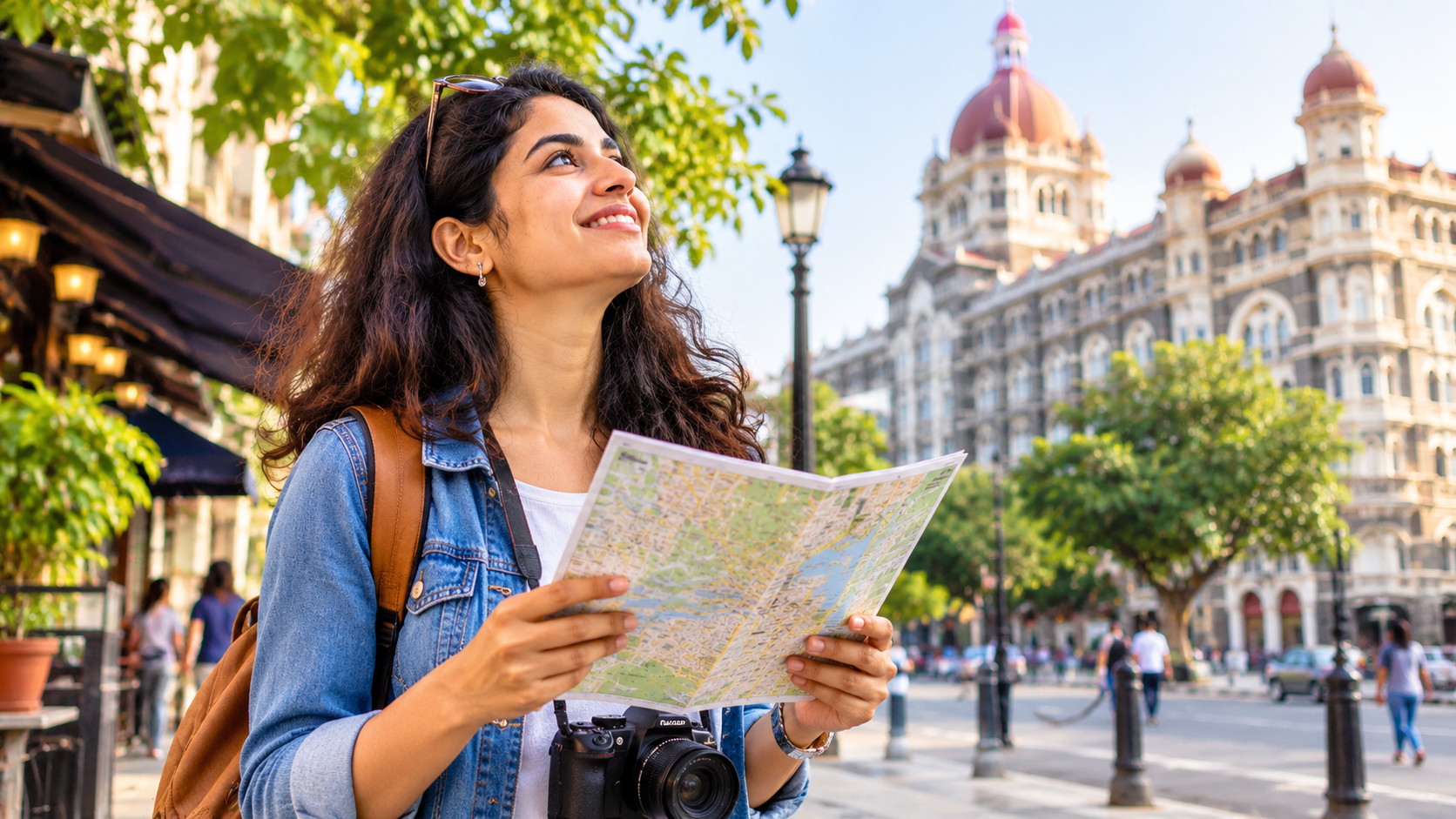
When we think about travelling, our minds usually go to places far away. We imagine a weekend in the hills, a holiday by the sea or a visit to a city we have never seen before. We save travel photographs, make plans and wait for the right time to take a break.
But what about the place we already live in?
How often do we actually explore our own city? We may pass the same old buildings every day without noticing their architecture, walk through familiar markets without looking at the shops or drive past interesting streets without wondering where they lead. We know our daily routes so well that we rarely pay attention to what lies beyond them.
Perhaps we do not always need to travel somewhere new to enjoy a change of scenery. Sometimes, we just need to look at familiar surroundings with fresh eyes. Being a tourist in our own city can help us rediscover places we have taken for granted and find enjoyment in experiences that have been around us all along.
When Familiar Places Become Invisible
Have you ever visited a place after several years and suddenly noticed details you had never paid attention to before? Perhaps an old building has beautiful architecture, a market has changed considerably or a quiet street has become a lively neighbourhood. The interesting part is that some of these details may have been there all along.
Psychologists use the term habituation to describe how our attention tends to decrease when we repeatedly encounter the same stimulus. In everyday life, this means we gradually stop noticing things that are constantly around us. Our familiar surroundings become part of the background.
This is why a tourist may find an ordinary street fascinating while someone who lives there barely looks at it. The tourist is curious, while the resident is often focused on reaching the next destination. It is not necessarily the place that is different; it is the way each person experiences it.
Sometimes, we do not need a new destination. We need to become curious about the one we already have.
Step Outside Your Usual Routes
Most of us experience our cities through a handful of familiar routes. We travel between home, work, school, shopping areas and places we visit regularly. We know how to get where we need to go, but that does not necessarily mean we know our city well.
Try taking a different route one day. Visit a neighbourhood you have always passed but never explored. Walk through an old market, step into a local museum or spend an afternoon in a public garden. You might discover something interesting just a few streets away from your usual route.
In a city like Thiruvananthapuram, for instance, someone who regularly visits the main shopping areas might enjoy exploring the older parts of the city, heritage buildings and cultural spaces. In other Indian cities, it could be a traditional bazaar, a historic railway station, a riverside walkway or a neighbourhood known for its local food.
You could even make a small challenge out of it: explore one unfamiliar neighbourhood every month. You do not need to cover the entire city. A little exploration is enough to break the routine.
Let the Day Surprise You
One of the nicest things about travelling is that not everything goes according to plan. You might stop at a little café because it looks inviting, spend an unexpected hour at a local market or find a quiet street that you would never have discovered through a travel itinerary.
Why not allow the same freedom when exploring your own city?
Choose an area, start walking and see what catches your attention. Visit a local bakery, try a dish you have never tasted or browse through a shop selling traditional crafts. If there is a local festival or cultural event happening nearby, make time to experience it. These small discoveries can sometimes become the most enjoyable part of the outing.
There is no need to rush from one place to another or make a checklist of everything you must see. The idea is to enjoy the experience, not to complete a sightseeing schedule. Leave room for unexpected conversations, interesting discoveries and even a little change of plan.
A Simple Way to Be More Present
When was the last time you walked through a familiar place without looking at your phone or thinking about what you had to do next?
Exploring your city at a slower pace gives you an opportunity to notice things you usually miss. It could be the sound of vendors calling out in a market, the smell of freshly prepared food, the evening light falling on an old building or the everyday conversations happening around you.
You do not have to turn this into a formal mindfulness exercise. Just pay attention to where you are. Instead of rushing to reach a destination, enjoy the walk and take in what is happening around you.
This is one of the unexpected benefits of exploring familiar surroundings. It gives us a reason to step out of autopilot. Even an ordinary afternoon can feel refreshing when we are fully present rather than simply moving through a routine.
Enjoying Travel Without Spending Too Much
Not every break has to involve flights, hotel bookings and expensive plans. For many people, frequent holidays are simply not practical. Work, family responsibilities and travel expenses often make it difficult to get away.
Exploring your own city offers another possibility. A visit to a public garden, a heritage walk, a local food spot or a cultural event can give you a pleasant change without requiring a large budget. Sometimes, even an evening walk through an interesting neighbourhood is enough.
It can also be a lovely way to spend time with family or friends. Children may enjoy discovering places they have only seen from a car window. Friends can catch up over a meal at a new local café, while couples can turn an ordinary weekend into a small adventure.
Of course, local exploration cannot replace the experience of travelling to a distant destination. But it reminds us that enjoyable experiences do not always have to be expensive or far away.
Getting to Know the Place You Call Home
When we begin exploring our surroundings, we often discover more than just new places. We learn little things about the city's history, culture and people.
You might find a family-run restaurant that has served the same dishes for decades, speak to a shopkeeper who has watched the neighbourhood change or discover a local festival you never knew existed. You may even learn the story behind a familiar building or understand why a particular street is known for a certain trade.
These encounters give us a different connection with our surroundings. A city is not just a collection of roads, buildings and shopping centres. It is also made up of people, traditions, stories and everyday activities that give it character.
The more we explore, the more we realise that there is often much more to a familiar place than we initially thought.
Your Next Travel Experience Could Be Close to Home
We often wait for a holiday or a change of location before allowing ourselves to feel adventurous. Yet, curiosity does not depend on how far we travel. It begins with a willingness to look around and explore.
The next time you have a free afternoon, try seeing your city as though you have just arrived. Take a different route, visit a place you have always ignored or walk through a neighbourhood without a fixed plan.
You may not discover a famous attraction or a spectacular view. Perhaps you will simply find a pleasant little café, an interesting old building or a street you would like to visit again.
But that is the point. We do not always have to go somewhere new to experience something different. Sometimes, the most rewarding discoveries are waiting in places we have stopped noticing. All it takes is a little curiosity and the willingness to see our own city differently.