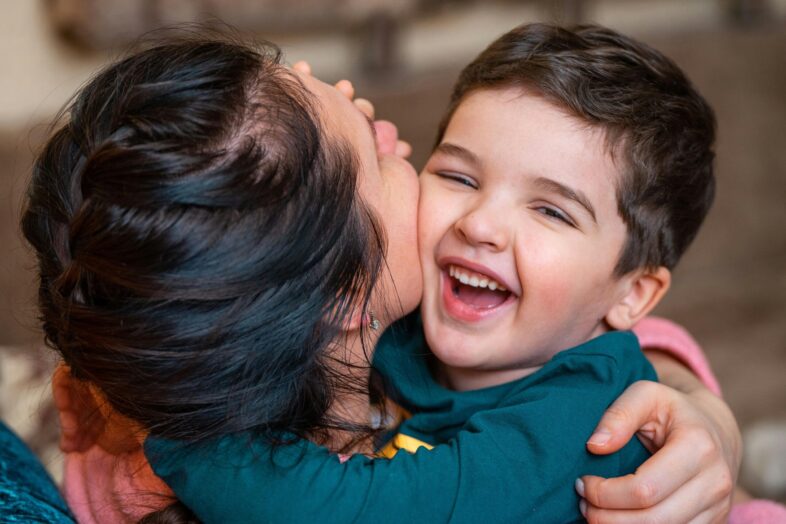
Raising emotionally strong children means teaching them not just how to succeed, but how to live — with empathy, resilience, and self-awareness
By Surya Pillai
The world our children are living in is very different as compared to the one we knew. Even before a child can learn how to ride a bicycle, he or she is expected to be a master in academics, sports, communication, and even coding. Achievement is celebrated in schools, by parents, and by society, but what about the silent power that comes with being emotionally balanced? In this hurly burly of training children to succeed, we often tend to forget training them to live.
Emotional strength does not imply that one has to suppress emotions and remain tough at all times. It is all about assisting children to learn how to identify their feelings, communicate them without fear, and overcome disappointments. A child who knows how to deal with disappointment, express oneself, and empathise is in a better position to deal with the world as opposed to one who achieves good grades.
Knowing about Emotional Strength
The process of emotional strength starts with consciousness. Children who can name whatever they feel, whether it is anger, sadness, jealousy, or fear are already making the first step towards controlling it. By promoting the use of emotions in words (I feel hurt, I am anxious, I am proud), parents provide the children with the means to comprehend their internal world.
One wants to say to children, “Stop crying,” or “Be a man. However, well-intended phrases can teach them to conceal emotions instead of managing them. Rather, recognition of their feelings (I can see that you are upset, and that is okay) would make them have confidence in their feelings rather than being afraid of them.
Discovering the Secret of Resilience in Real Life
Resilience is not something taught, it is a thing that is acquired in life. Allow children to fail, struggle and make attempts. It is only natural that when a child loses a game, forgets his homework, or fails to be accepted to a competition, he or she feels hurt. But it is also a chance to know that failure does not make them.
We tend to hurry up and correct the problems as parents. However, it helps to take a step back and leave them to discover their own solutions to create confidence. What do you suppose you can do about it? A mild inquiry. encourages problem-solving. It informs them, I believe you can work this out.
A resilience is developed in the gap between falling and standing up.
The value of Sympathy and Generosity
Empathy may seem to be an unknown virtue in a fast-paced and competitive world. However, benevolence is among the most effective signs of emotional maturity. Make children listen to the opinion of others. Emotional intelligence is developed by simple things, such as sharing toys with a friend, calming down a friend, or supporting an elderly neighbor.
They start to strike a balance between ambition and caring when they discover that what they say and do can influence other people. All in all, emotional strength is not just about how much someone can withstand- it is also about how soft someone can be even when the world is hard.
Simulating Household Emotional Strength
Children are learners who learn through observation rather than hearing. To have emotionally intelligent kids we must have emotionally attentive adults. Parents demonstrate what strength really looks like when they not only acknowledge their errors but also do so in a calm and non-emotional manner or when they are sincere in their apologies.
Rather than conceal stress, discuss it in a positive manner: “I had a bad day, so I am taking some time off to relax. This normalizes the emotional control. It shows kids that even adults can be frustrated and sad but they manage to cope with it productively.
Emotional connection may also be enhanced with the help of family rituals such as joint meals, open discussions, or gratitude journals. These little activities form a feeling of belonging which gives the children the strength to confront the external world.
Finding the right balance between Competition and Connection
Competition may be good- it motivates work and development, yet in the absence of emotional foundation it may also result in stress and rivalry. Make your children understand that success is not a contest but a process that is individual to every person. Reward work as well as success. Compliment their endurance, imagination, and collaboration, but not their grades or positions.
Children who are loved as they are and not as they perform on certain tasks in life have a sense of self-worth that cannot be shaken by any competition.
A Gentle Reminder to Parents
Bringing up emotionally tough kids is not a means of keeping them out of the way of hurt, but rather a means of equipping them to handle it gracefully. As parents, teachers, and caregivers we are expected to be their safe place: the place they can come back to after a bad day, the voice that says, You are enough, no matter what.
In a world where performance is imperative, emotional strength is the silent superhero which enables children to become balanced, confident and caring adults. And the best part? It begins at home–with us.
Leave a Reply